
When planning an air compressor system for a small or medium-sized factory, many users wonder: “Should I choose a piston air compressor or a screw air compressor?”, or “How much electricity can I save by switching to a variable frequency screw air compressor?”.
However, choosing a compressor simply because “screw compressors are more advanced” or “an inverter always saves energy” may lead to an unsuitable configuration and disappointing results. A more practical approach is to evaluate the actual air demand, operating conditions, site environment, and maintenance capability before selecting the right air compressor type.
SWAN Air Compressors recommends evaluating your selection from the following three perspectives:
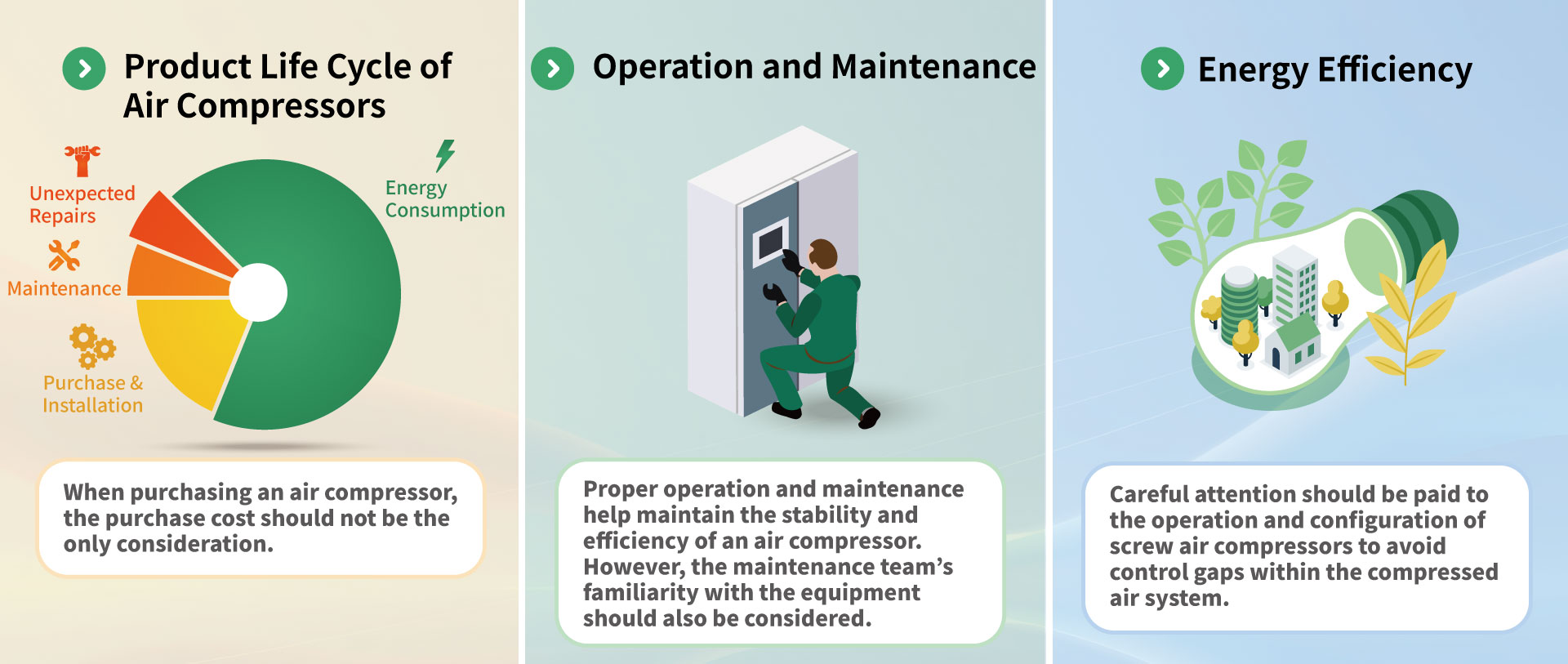
1. Product Life Cycle
Screw air compressors are designed with temperature-controlled cooling systems and are suitable for long operating hours with high efficiency when properly maintained.
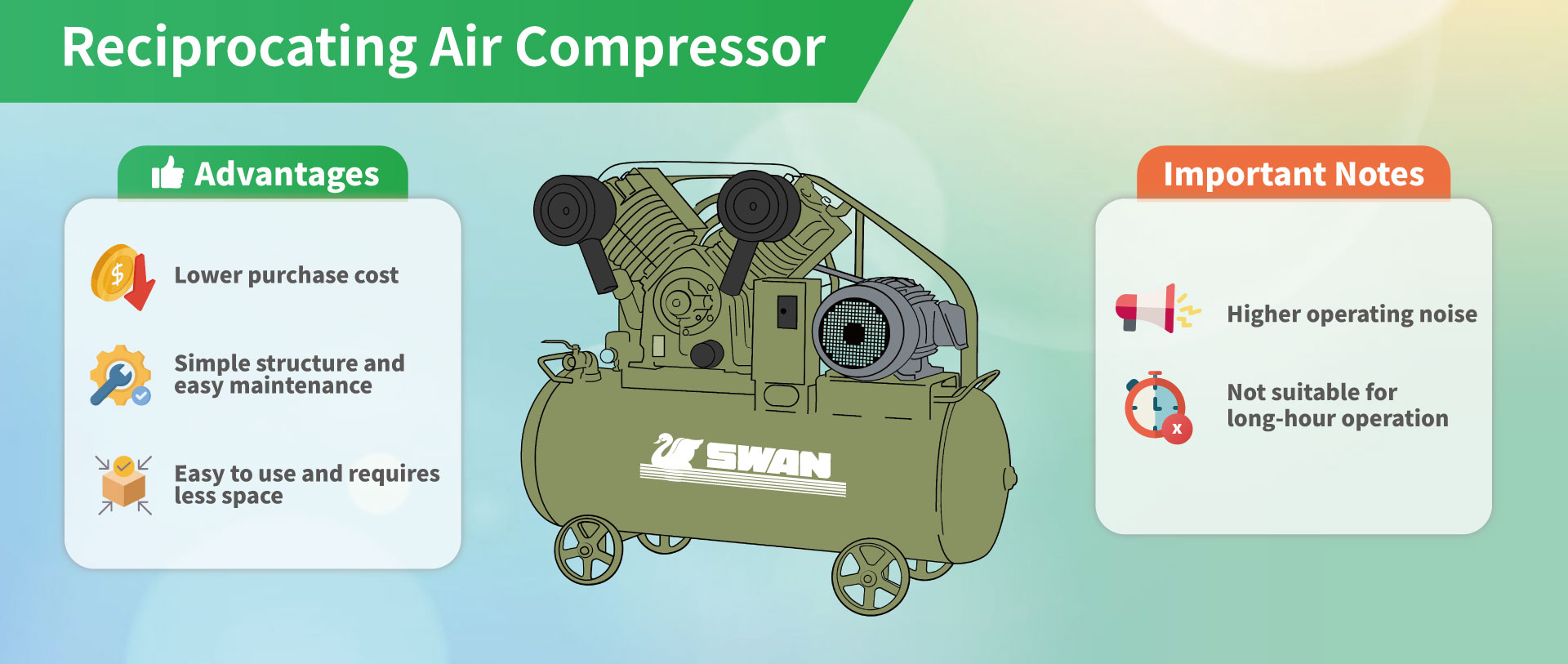
Piston air compressors have a simple and durable structure. However, due to greater mechanical friction during operation, they are more suitable for intermittent use rather than continuous long-hour operation.
2. Operation and Maintenance
Screw air compressors offer lower noise and vibration. Their stable performance depends heavily on proper maintenance of the cooling system and oil circulation system, including regular replacement of consumables. If maintenance is not performed regularly and properly, the expected energy-saving benefits may not be achieved, and there may even be a risk of major air end repair or replacement. Therefore, screw air compressors usually require a higher level of professional maintenance support.
Piston air compressors have a more straightforward structure. Technicians with basic training can usually perform routine maintenance and parts replacement. They also provide better adaptability in various working environments and are often preferred by users who require easier self-maintenance. However, additional planning may be needed to reduce noise and vibration.
3. Energy Efficiency
While screw air compressors are typically known for their efficient operation, improper model selection can lead to control gaps. Furthermore, poor oil quality and inadequate maintenance can reduce compression efficiency, resulting in additional energy consumption and failing to reach expected energy-saving targets.
Conversely, although the operating principle of piston compressors inherently limits their peak energy efficiency, proper sizing and smart management can allow them to achieve overall energy savings comparable to screw compressors in many small to medium sized industrial applications."
Comparison: Piston Air Compressor vs. Variable Frequency Screw Air Compressor
| Item | Piston / Reciprocating Air Compressor | Variable Frequency Screw Air Compressor |
| Air Demand Pattern | Simple air demand, mainly intermittent use | Continuous and long-hour air demand |
| Common Applications | Small-area air supply; users with higher self-maintenance requirements | Centralized compressed air systems |
| Main Advantages | Economical, practical, easy to understand, and relatively simple to maintain | Adjusts output according to actual demand, helping achieve energy-saving goals while maintaining stability and flexibility |
| Important Notes | Not ideal for long-hour continuous operation; noise is usually more noticeable | Proper maintenance is necessary to maintain energy efficiency |
| Planning Direction | Entry-level configuration, small working areas, basic air demand | High-efficiency system planning, combined with IoT remote monitoring and ISC multi-unit control systems to achieve stable compressed air management |
| Possible Problems from Incorrect Selection | Operation away from the optimal load range, accelerating component wear | Control gaps may occur, causing unnecessary energy consumption or preventing the system from achieving the expected energy-saving performance of inverter control |
Why Are Piston Air Compressors Still Common in Commercial and Industrial Applications?
When comparing air compressor types, many users may assume that piston air compressors are old technology while screw air compressors are newer and have more energy-saving. However, the long-term operating efficiency of an air compressor still depends on its quality, stability, and suitability for the application.
For independent, basic, and diverse commercial or industrial applications, piston air compressors remain a very practical option. Their simple structure, easier maintenance, and cost-effective configuration make them suitable for many users with intermittent or straightforward compressed air needs.
When Is a Screw Air Compressor More Suitable?
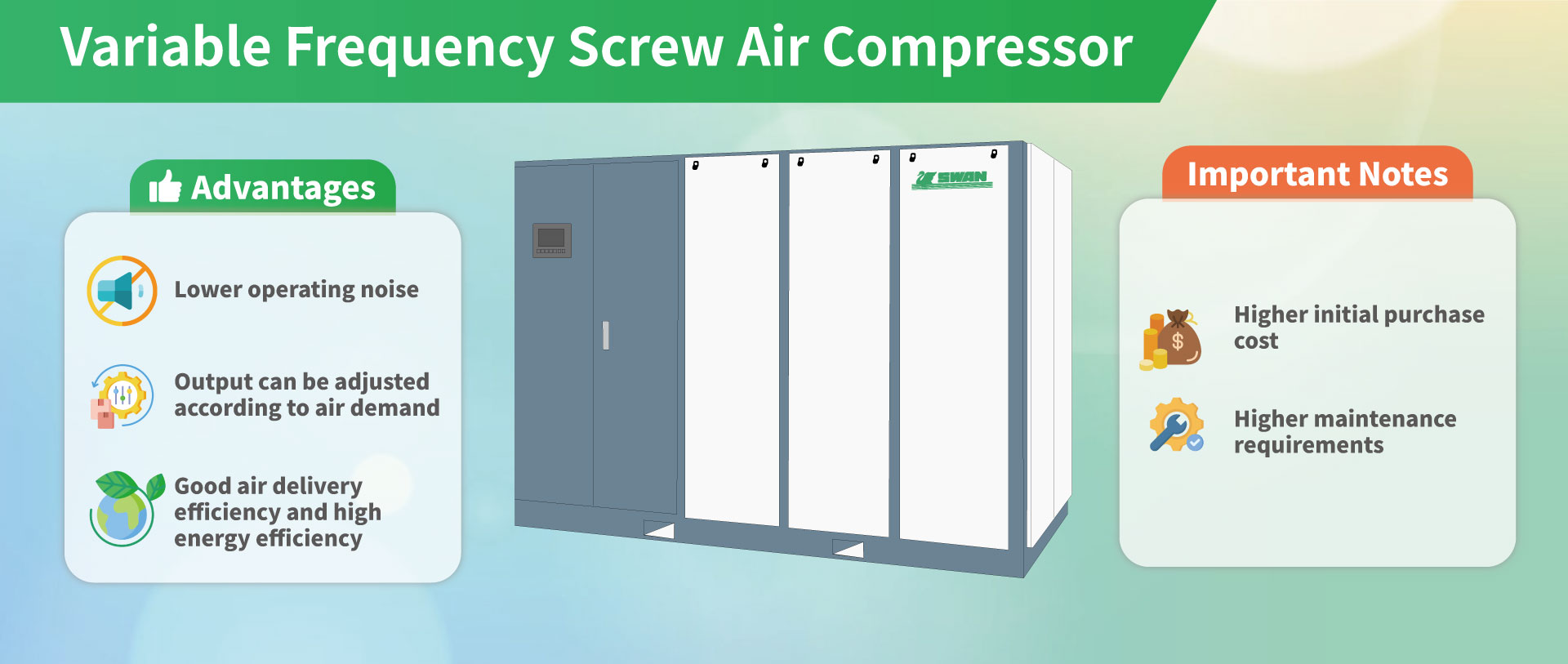
Screw air compressors are commonly used in medium and large factories, especially when the system is planned around continuous and high-volume air demand. With centralized and professional maintenance management, screw compressors can support energy optimization and backup system planning.
Most screw air compressors on the market operate with an oil-injected compression process and an oil-air separation system. Excessively high or low operating temperatures may cause related risks. Therefore, when air demand is continuous and stable, screw air compressors can be a suitable choice.
When the air demand falls around 70–90% of the rated air delivery, the energy-saving benefits of a variable frequency screw compressor can become more significant.
What Matters More Than the Compressor Type?
An air compressor is an important part of production planning. The best compressor is not always the newest model, but the one that can efficiently support production goals while matching the user’s operating environment and management requirements.
If the demand is intermittent, basic, and simple, a piston air compressor remains a practical and reasonable choice. If the system has entered high-volume production air demand or requires centralized system management, a screw air compressor is usually more suitable to achieve energy savings and system optimization.
If you are evaluating how to improve your compressed air system, please leave your contact information. SWAN Air Compressors expert team will assist you with improvement planning, including model selection recommendations, and system upgrade suggestions to help you complete your equipment planning more efficiently.